
RCS Messaging: A Smarter Way to Connect with Customers
Imagine receiving a message from your favourite brand that does more than just share information. You can explore a new product, discover an exciting offer, view eye-catching visuals, or take action with a simple tap.
Sounds convenient, right?
That's the experience RCS (Rich Communication Services) brings to business messaging.
By combining text, images, videos, branded business profiles, and interactive buttons, RCS gives businesses new ways to turn everyday messages into engaging customer experiences. Whether it's showcasing a product, announcing a special offer, or sharing an important update, every message becomes an opportunity to connect with customers in a more interactive and meaningful way.
For businesses looking to make their communication more engaging and customer-friendly, RCS opens the door to new possibilities — helping brands share information, encourage interaction, and build stronger connections with their audiences.
What Is RCS Messaging?
RCS stands for Rich Communication Services. It is a messaging technology that enhances traditional text-based communication with additional multimedia and interactive features.
Depending on device compatibility and platform support, RCS messages can include images, videos, branded business profiles, suggested replies, and interactive buttons.
For example, an online store can send customers a message featuring a new product, a short description, and a button to explore the collection. Similarly, a travel company can share a booking update with relevant trip details in a visually engaging format.
The idea is simple: give businesses more ways to communicate information clearly and help customers interact with their messages.

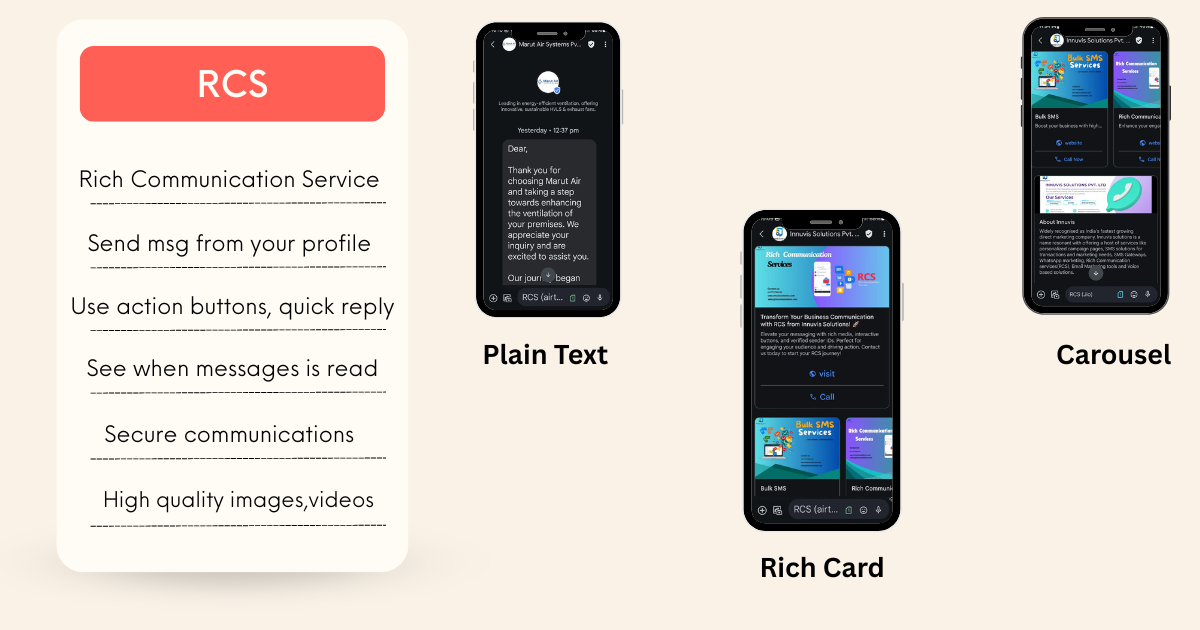
Types of RCS Message Templates
Different business goals call for different messaging formats. Whether a business wants to share a quick update, highlight a product, or present several offers, RCS supports different formats to suit these communication needs.
1. Standard Text Message
Text-based messages are useful for sharing clear, concise information with customers. Businesses can use this format for appointment reminders, service updates, notifications, and other everyday communications.
Depending on the implementation, RCS can also support suggested replies and action buttons, helping customers respond or take the next step conveniently.
Best for: Notifications, reminders, alerts, and everyday business updates.
2. Rich Card
A Rich Card brings visual content and useful information together in a single message. It can include text, images or videos, and interactive buttons, depending on the supported format.
Businesses can use rich cards to introduce products, explain services, highlight special offers, or share event information in a visually appealing way.
For example, a retail brand could showcase a product image alongside its key features and a button that directs customers to learn more.
Best for: Product promotions, special offers, service highlights, and event announcements.
3. Carousel
An RCS Carousel allows businesses to present multiple cards within a single messaging experience. Customers can swipe through the cards to explore different products, services, or offers.
Each card can contain relevant visuals, descriptions, and interactive buttons, making it easier for customers to discover available options.
For example, a real estate company could showcase multiple property projects, while a travel business could feature different holiday packages in one message.
Best for: Product catalogues, real estate projects, travel packages, and multiple promotional offers.
Choosing the right message format helps businesses present information in a way that aligns with their goals and their customers' needs.
Why Should Businesses Consider RCS Messaging?
Effective business communication is about delivering the right information in a way that customers can easily understand and interact with. RCS offers several features that can support this goal.
1. Rich and Engaging Content
Images, videos, and interactive elements give businesses more flexibility in presenting information. These features can help make product details, service information, and promotional messages easier to explore.
2. Branded Business Identity
Supported RCS experiences can display a business name, logo, and verified sender information. This helps customers identify the brand communicating with them and creates a more recognisable messaging experience.
3. Convenient Customer Interaction
Interactive buttons and suggested replies can help customers explore products, confirm appointments, check relevant information, or take the next step directly from a message.
4. Personalised Communication
Businesses can tailor messages according to customer interests, preferences, and relevant interactions, provided they have the appropriate data, permissions, and systems in place.
5. Flexible Communication Formats
From simple notifications to visually rich promotions, RCS offers different ways to present business information. Companies can select formats based on the purpose of each message and the experience they want to create.
6. Opportunities for Better Customer Experiences
By combining useful information with interactive features, businesses can make certain customer journeys more convenient, whether customers are exploring a product, reviewing an offer, or accessing service information.
Where Can RCS Messaging Be Used?
RCS messaging can support a wide range of business communication needs across different industries. Its features can be adapted to suit customer interactions, promotional activities, and service updates.
- E-commerce: Showcase products, announce special offers, confirm orders, and share delivery updates.
- Retail: Highlight new collections, introduce seasonal promotions, and present product recommendations.
- Banking and Finance: Share transaction alerts, payment reminders, and service notifications with appropriate security and compliance measures.
- Travel and Hospitality: Send booking confirmations, present itinerary details, and showcase travel or hotel packages.
- Education: Share course information, admission announcements, application updates, and examination reminders.
- Real Estate: Showcase properties, introduce new projects, share property details, and invite customers to schedule site visits.
- Healthcare: Send appointment reminders, clinic updates, and relevant service information while protecting sensitive patient data.
- Automotive: Introduce new vehicles, highlight features, send service reminders, and invite customers for test drives.
- Telecommunications: Share recharge reminders, explain available plans, communicate service updates, and highlight relevant offers.
- Insurance: Send policy renewal reminders, claim status updates, and important policy information.
- Food and Restaurants: Promote special menus, introduce new offerings, share discounts, and provide order updates.
- Logistics and Delivery: Share shipment tracking information, delivery notifications, and estimated arrival updates.
- Events and Entertainment: Promote upcoming events, share registration confirmations, and send event reminders.
The most suitable approach depends on the type of information being shared, the audience, and the desired customer action. Businesses can use RCS alongside other messaging channels to support different communication requirements.
The Future of Business Messaging
Business communication continues to evolve as customers look for convenient ways to access information, explore services, and interact with brands.
Messaging remains an important part of this experience, offering businesses a direct way to share updates, reminders, offers, and other useful information. Technologies such as RCS add further opportunities by bringing visual content and interactive capabilities into supported messaging experiences.
From showcasing products to sharing booking updates, RCS gives businesses more flexibility in how they present information and engage with their audiences. When combined with a well-planned communication strategy, these capabilities can contribute to more convenient and relevant customer interactions.
At Innuvis, we believe that effective communication starts with understanding customer needs and choosing the right technology for every interaction. With messaging solutions such as SMS and RCS, businesses can explore different ways to connect with customers and build meaningful relationships.

Because great communication isn't just about sending a message. It's about making that message matter.
Ready to explore new possibilities in business messaging? Connect with Innuvis to discover communication solutions that align with your business goals.